
Spinal disc problems are among the most common causes of chronic back pain, neck pain, sciatica, and reduced mobility. While some patients experience issues at a single spinal level, others may develop disc problems in multiple areas of the spine. This often raises an important question: Can Endoscopic Spine Surgery treat multiple disc problems at once?
Advancements in spinal technology have made it possible to address certain complex spinal conditions with greater precision and minimal tissue disruption. For eligible patients, Endoscopic Spine Surgery may offer an effective solution for treating multiple affected discs while reducing recovery time and surgical trauma.
At Chennai Spine Care, we specialize in advanced minimally invasive spinal procedures designed to help patients return to their daily activities with less pain and faster recovery.
Understanding Multiple Disc Problems
The spine consists of vertebrae separated by intervertebral discs that act as shock absorbers and provide flexibility.
Over time, discs can become damaged due to:
- Age-related degeneration
- Repetitive strain
- Poor posture
- Heavy lifting
- Sports injuries
- Trauma
- Genetic factors
Some patients may develop problems at more than one spinal level, including:
- Multiple herniated discs
- Degenerative disc disease
- Spinal stenosis affecting several segments
- Nerve compression at different levels
- Recurrent disc prolapse
When multiple discs are involved, symptoms can become more severe and may affect daily activities significantly.
What Is Endoscopic Spine Surgery?
Endoscopic Spine Surgery is a modern minimally invasive surgical technique that uses a specialized endoscope equipped with a high-definition camera and surgical instruments.
The procedure is performed through a very small incision, allowing surgeons to visualize and treat spinal conditions without extensive muscle or tissue disruption.
Compared to traditional open spine surgery, endoscopic techniques offer several advantages:
- Smaller incisions
- Less blood loss
- Reduced muscle damage
- Lower risk of infection
- Faster recovery
- Shorter hospital stays
- Minimal post-operative pain
Can Multiple Disc Problems Be Treated During One Procedure?
The answer depends on several factors, including the location, severity, and nature of the disc problems.
In many cases, Endoscopic Spine Surgery can successfully address multiple disc issues during a single operation, particularly when:
1. Multiple Herniated Discs Are Located Close Together
If two or more herniated discs are present within the same region of the spine, an endoscopic approach may allow the surgeon to access and treat the affected areas through minimal incisions.
2. Nerve Compression Occurs at Multiple Levels
Patients suffering from nerve compression at several spinal levels may benefit from endoscopic decompression procedures that relieve pressure on affected nerves.
3. Lumbar Disc Problems Affect Multiple Segments
Certain lumbar spine conditions involving adjacent discs can often be treated during one surgical session, depending on the complexity of the case.
When Multiple Procedures May Not Be Suitable
Although modern endoscopic techniques are highly versatile, not every patient is a candidate for treating all spinal issues in a single procedure.
Factors that influence treatment decisions include:
- Number of affected spinal levels
- Severity of degeneration
- Presence of spinal instability
- Previous spinal surgeries
- Overall patient health
- Complexity of nerve compression
A thorough evaluation by the best spinal cord doctor is essential to determine the safest and most effective treatment strategy.
Conditions Commonly Treated with Endoscopic Spine Surgery
Herniated Disc
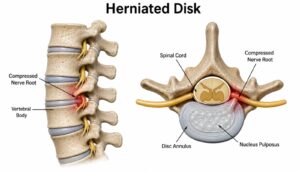
A slipped or prolapsed disc can compress nearby nerves and cause severe pain.
Symptoms may include:
- Lower back pain
- Leg pain (sciatica)
- Numbness
- Tingling sensations
- Muscle weakness
Spinal Stenosis
Spinal stenosis occurs when the spinal canal narrows and places pressure on nerves.
Endoscopic decompression can help relieve symptoms while preserving surrounding tissues.
Degenerative Disc Disease
Disc degeneration can result in chronic pain and reduced mobility.
Certain cases can be effectively managed using minimally invasive endoscopic techniques.
Recurrent Disc Herniation
Patients experiencing repeated disc problems after previous treatment may be candidates for endoscopic revision procedures.
Benefits of Treating Multiple Disc Problems in One Surgery
When medically appropriate, addressing multiple spinal issues during a single procedure can offer several advantages.
Reduced Overall Recovery Time
Patients undergo one recovery period instead of multiple surgical recoveries.
Fewer Hospital Visits
A single operation may reduce the need for additional hospital admissions and procedures.
Lower Overall Surgical Stress
Combining treatments may help minimize repeated exposure to anesthesia and surgical intervention.
Faster Return to Daily Activities
Many patients can resume normal activities sooner compared to undergoing multiple separate surgeries.
The Importance of Accurate Diagnosis
Successful outcomes depend on identifying the exact source of symptoms.
Before recommending surgery, spine specialists typically perform:
Clinical Evaluation
A detailed assessment of symptoms and physical function.
Advanced Imaging
Diagnostic tests may include:
- MRI scans
- CT scans
- Digital X-rays
Nerve Assessments
In some cases, additional testing helps determine the extent of nerve involvement.
A precise diagnosis ensures that only the discs responsible for symptoms are targeted during treatment.
Recovery After Endoscopic Spine Surgery
One of the major advantages of Endoscopic Spine Surgery is the potential for faster recovery compared to traditional open procedures.
Recovery benefits may include:
- Reduced post-operative discomfort
- Early mobilization
- Smaller scars
- Shorter hospital stays
- Faster return to work and daily activities
Recovery timelines vary depending on the number of spinal levels treated and the patient’s overall health.
Why Choose Chennai Spine Care for Advanced Spine Treatment?
At Chennai Spine Care, we are committed to delivering advanced, patient-focused spinal care using the latest minimally invasive techniques.
Our approach emphasizes:
- Accurate diagnosis
- Personalized treatment plans
- Advanced endoscopic procedures
- Comprehensive rehabilitation
- Long-term spinal health
Patients seeking expert spine treatment benefit from modern technologies and evidence-based care designed to achieve optimal outcomes.
When Should You Consult a Spine Specialist?
You should seek professional evaluation if you experience:
- Persistent back pain
- Neck pain lasting several weeks
- Sciatica
- Numbness or tingling
- Difficulty walking
- Muscle weakness
- Pain that affects daily activities
Consulting the best spinal cord doctor early can help prevent further complications and improve treatment success.
Conclusion
For many patients, Endoscopic Spine Surgery offers an effective and minimally invasive solution for treating multiple disc problems in a single procedure. While not every case is suitable for combined treatment, modern endoscopic techniques can successfully address multiple levels of nerve compression and disc pathology with less tissue damage and faster recovery.
At Chennai Spine Care, our goal is to provide advanced spine treatment tailored to each patient’s unique condition. If you are experiencing symptoms related to multiple disc problems, an expert evaluation can help determine whether endoscopic surgery is the right option for you.
Frequently Asked Questions (FAQs)
1. Can Endoscopic Spine Surgery treat more than one herniated disc at the same time?
Yes. In selected cases, Endoscopic Spine Surgery can address multiple herniated discs during a single procedure, depending on their location and severity.
2. Is Endoscopic Spine Surgery safer than traditional open spine surgery?
For suitable candidates, endoscopic surgery often involves smaller incisions, less tissue disruption, reduced blood loss, and faster recovery compared to traditional open surgery.
3. How long does recovery take after Endoscopic Spine Surgery?
Recovery varies by patient and the complexity of the procedure, but many individuals experience faster recovery and return to daily activities sooner than with conventional surgery.
4. Who is a good candidate for Endoscopic Spine Surgery?
Patients with herniated discs, spinal stenosis, nerve compression, or certain degenerative spine conditions may be suitable candidates after a detailed evaluation.
5. When should I consult the best spinal cord doctor for disc problems?
You should seek medical advice if you have persistent back pain, sciatica, numbness, weakness, or symptoms that affect your quality of life despite conservative treatment.




0 Comments