
What Are the Latest Scoliosis Correction Techniques?
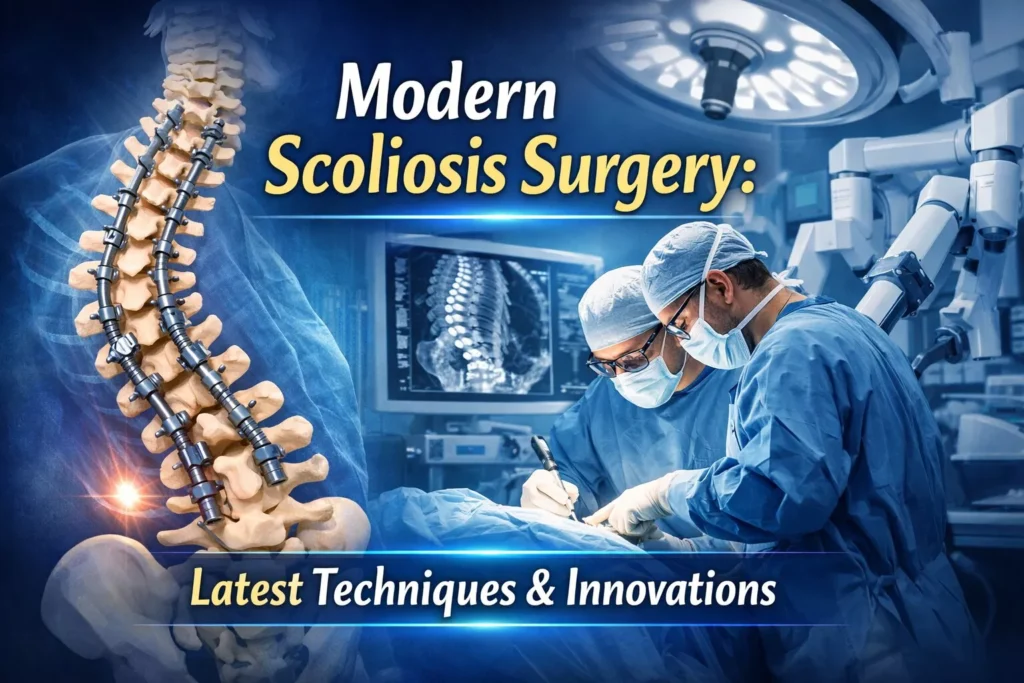
Scoliosis is a spinal condition in which the spine curves sideways, forming a C-shaped or S-shaped curve instead of remaining straight. While mild scoliosis may not require treatment, moderate to severe cases often need medical intervention to prevent progression, pain, and posture problems. In the past, scoliosis treatment relied mainly on traditional open spinal fusion surgery, which involved large incisions and lengthy recovery periods. However, advancements in medical technology have dramatically changed how surgeons treat spinal deformities today. Modern innovations such as minimally invasive scoliosis surgery, robotic scoliosis surgery, and non-fusion scoliosis correction techniques have made treatment safer, more precise, and faster to recover from. These developments have significantly improved patient outcomes and quality of life. If you are looking for new technology for scoliosis treatment in Chennai, Dr. Vignesh Pushparaj, a highly experienced Scoliosis Spine Surgeon in Chennai, provides advanced and cost-effective scoliosis correction surgery using the latest scoliosis surgery techniques. Understanding Scoliosis and Why Treatment Has Evolved What is Scoliosis? Scoliosis is a condition where the spine curves abnormally to the side. Instead of maintaining a straight vertical alignment, the spine develops a curvature that may worsen over time. The condition can affect both children and adults and may cause visible posture changes. Common types of scoliosis include: Idiopathic scoliosis – The most common form, often appearing during adolescence with no clear cause Congenital scoliosis – Caused by abnormal spinal development before birth Neuromuscular scoliosis – Associated with conditions such as cerebral palsy or muscular dystrophy Degenerative scoliosis – Occurs in adults due to age-related spinal degeneration While mild cases can be managed with monitoring or bracing, severe cases may require modern scoliosis correction surgery. When is Scoliosis Surgery Needed? Surgery is usually recommended when the spinal curve becomes severe or continues to worsen despite conservative treatment. Doctors may recommend scoliosis correction surgery when: The spinal curve exceeds 40–50 degrees The curvature continues to progress rapidly Severe back pain develops Posture imbalance becomes noticeable Lung or breathing problems occur due to spinal deformity With advancements in advanced scoliosis treatment techniques, surgery today is safer and more effective than ever before. Limitations of Traditional Scoliosis Surgery Traditional scoliosis surgery primarily involved open spinal fusion, which, although effective, had several limitations. Challenges of traditional surgery included: Large surgical incisions Significant muscle damage Greater blood loss Longer hospital stays Limited spinal flexibility after surgery These limitations led to the development of modern spine surgery for scoliosis, focusing on precision, minimally invasive techniques, and better recovery outcomes. How Modern Scoliosis Correction Surgery Has Changed In recent years, medical technology has transformed scoliosis treatment. Surgeons now have access to highly advanced tools and techniques that improve surgical precision and patient recovery. Key advancements in modern scoliosis treatment include: Minimally invasive scoliosis surgery Robotic scoliosis surgery Computer-assisted navigation systems 3D imaging technology Motion-preserving correction methods These innovations allow surgeons to achieve better spinal alignment while minimizing tissue damage. Today, patients have multiple scoliosis correction surgery options, depending on the severity of their condition and individual health needs. Minimally Invasive Scoliosis Surgery What is Minimally Invasive Scoliosis Surgery? Minimally invasive scoliosis surgery is an advanced technique that corrects spinal curvature through small incisions using specialized instruments and imaging guidance. Unlike traditional open surgery, this approach preserves surrounding muscles and tissues as much as possible. This technique has become one of the most important latest scoliosis surgery techniques used in modern spine surgery. Benefits of Minimally Invasive Surgery Patients undergoing minimally invasive procedures often experience several advantages compared to traditional surgery. Benefits include: Smaller surgical incisions Minimal muscle damage Reduced blood loss Less postoperative pain Faster recovery Shorter hospital stay Lower risk of infection These benefits make minimally invasive scoliosis surgery an increasingly popular option in modern scoliosis correction surgery. Robotic Scoliosis Surgery: Precision and Safety What is Robotic Scoliosis Surgery? Robotic scoliosis surgery is a cutting-edge technology that helps surgeons perform highly precise spinal procedures. The robotic system uses advanced 3D imaging and computer-guided navigation to assist in placing spinal implants accurately during surgery. The surgeon remains fully in control, while the robotic technology enhances accuracy and planning. Advantages of Robotic Spine Surgery Robotic technology has significantly improved the safety and effectiveness of scoliosis surgery. Key benefits include: Extremely accurate implant placement Improved spinal alignment correction Reduced risk of nerve damage Smaller incisions and less tissue damage Greater surgical precision Faster recovery times Many patients searching for new technology for scoliosis treatment in Chennai are increasingly choosing robotic scoliosis surgery due to its advanced capabilities. Non-Fusion Scoliosis Correction Techniques What Are Non-Fusion Scoliosis Treatments? Traditional scoliosis surgery often involves spinal fusion, which permanently joins two or more vertebrae together. However, non-fusion scoliosis correction techniques have emerged as innovative alternatives that allow the spine to retain more natural movement. Examples include: Vertebral Body Tethering (VBT) Growth-friendly surgical techniques for children Dynamic scoliosis correction systems These techniques are particularly beneficial for growing children and adolescents. Benefits of Non-Fusion Techniques Non-fusion procedures offer several advantages compared to traditional spinal fusion. Benefits include: Preservation of spinal flexibility Continued spinal growth in young patients Reduced stiffness after surgery Improved long-term mobility These techniques represent a major breakthrough in modern scoliosis correction surgery. Spinal Fusion vs Modern Scoliosis Surgery Traditional Spinal Fusion Spinal fusion has long been the standard surgical treatment for severe scoliosis. During this procedure: Two or more vertebrae are permanently fused together Metal rods, screws, and bone grafts are used to stabilize the spine Spinal curvature is corrected and prevented from worsening While effective, fusion limits movement in the treated portion of the spine. Modern Alternatives Advancements in technology have introduced several modern scoliosis surgery options that offer improved outcomes. Modern techniques focus on: Preserving spinal mobility Using minimally invasive surgical approaches Enhancing accuracy with robotic technology Achieving better cosmetic and functional results The comparison of spinal fusion vs modern scoliosis surgery highlights how innovation has improved patient care and recovery. Latest Technologies Transforming Scoliosis Surgery Several advanced technologies are now used to perform safer and more